

In November 2025, I joined a delegation from Fordham’s Campus Ministry in Washington, DC for the Ignatian Family Teach-In for Justice. The event convenes justice and advocacy-minded students from Jesuit high schools and universities around the country to hear from accomplished speakers in fields of social justice.
As a student passionate about migration justice, I enjoyed hearing from keynote speaker Yunuen Trujillo, an immigration attorney and community organizer. Trujillo spoke transparently about the steep challenges and systemic attacks that immigration lawyers face. Her message resonated with me since it highlighted the importance of not backing down in times of stress and crisis. As president of the Immigration Advocacy Coalition (IAC) at Lincoln Center, this perspective struck home. My goal is to raise awareness of and interest in topics of migration justice and to encourage students to become more involved in local immigrant communities. Seeing so many young people at the Teach-In who were passionate about advocacy was inspiring. Additionally, it taught me that this passion can be harnessed into action by being consistent and direct in reaching out to students, committing to small actions, and meeting people where they are. We can do this by bringing immigration advocacy into the Fordham community, in addition to trying to bring Fordham students out into the community.
Over the three-day conference, I attended three breakout sessions that underscored how interconnected global justice issues are. “Beyond the Headlines: Human Stories of Asylum at the Border and Beyond” featured two migrants who shared their personal experiences immigrating to the United States, including their difficult encounters at the border and with the American immigration system. Their insightful reflections put a face to a highly publicized, misunderstood issue. Despite facing a brutal immigration process, both speakers were consistent in trying to create a better life for themselves and their families. They demonstrated how “doing everything right”, a phrase often used by politicians and media, does not reflect the realities of America’s broken immigration system.
In “Journeying Toward Justice in Israel-Palestine,” two speakers discussed the devastating realities of life in Gaza. This eye-opening talk highlighted US involvement in funding Israel’s genocide, and how young people can get involved in advocacy at home for an issue that often feels far away by contacting their representatives and demonstrating for justice.
In the last session I attended, “Ignatian Accompaniment of Migrants: Through Kidnappings and Criminalization,” Fr. Brian Strassburger, SJ from Del Camino Jesuit Border Ministries spoke about his work at the border, the Trump administration’s criminalization of migrants, and the numbers, which politicians and the media often distort. He shared stories about migrants and families he has met through his work. Additionally, he presented a number of actionable policies that the government could take in order to better the immigration reality in the United States. For example, to encourage seasonal work contracts, a system that successfully operated in the US for decades (for example, the Bracero Program, from 1942-1964), or to stop criminalizing those awaiting asylum by placing them in detention centers. Fr. Strassburger explained the mechanics of modern enforcement: if an administration promises the mass deportation of “criminals,” it inevitably seeks to create more criminals by stripping legal status from asylum-seekers or targeting “under-the-table” workers. His presentation was so inspiring that a friend and I asked a group of Jesuits afterwards to ask if priests could run for office. Unfortunately, they can’t. However, Fr. Strassburger hosts The Jesuit Border Podcast, where he shares on-the-ground migrant stories at the US-Mexico border.
Overall, the Teach-In was insightful, educational, and inspiring. It showed me how various social justice issues connect to migration and how much interest and passion young people across various disciplines have for advocacy. Ultimately, it reaffirmed my commitment to migration justice. Returning to campus, the IAC channeled our DC momentum into action. We ramped up advertising and outreach efforts to students on campus. In April, we hosted our annual Undocumented Week of Action–a series of events to create support for undocumented students, with emphasis on collaborating with other student organizations (like the Anthropology Society and Art Club), as well as off campus partners like Movement for Justice in El Barrio. By broadening our coalition, we brought more varied student interest to the work of the Immigration Advocacy Coalition, an effort we hope to continue into the future.
Below are some pictures from the Teach-In
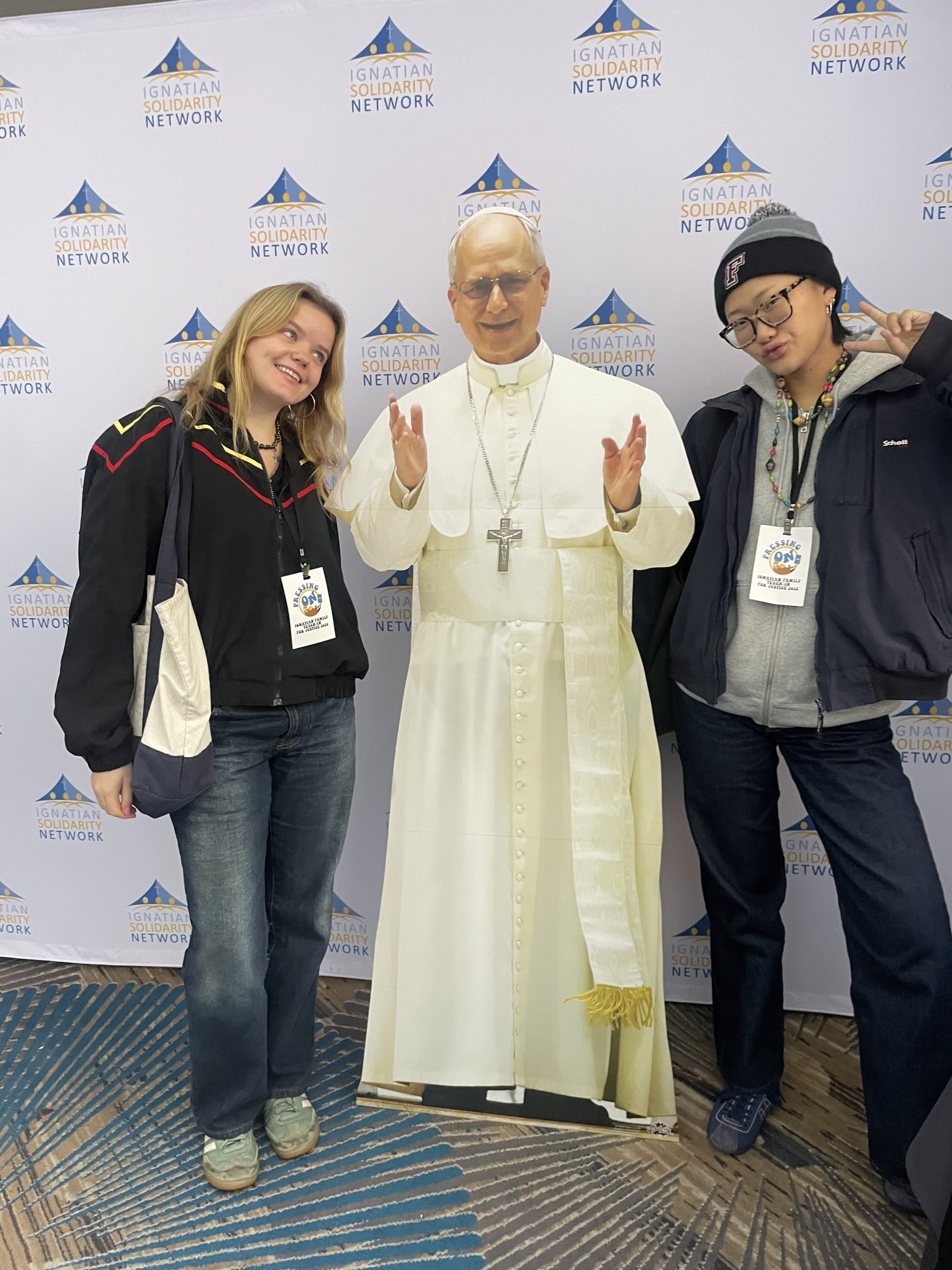
Zuza and Eva Lee, members of the IAC E-board at IFTJ
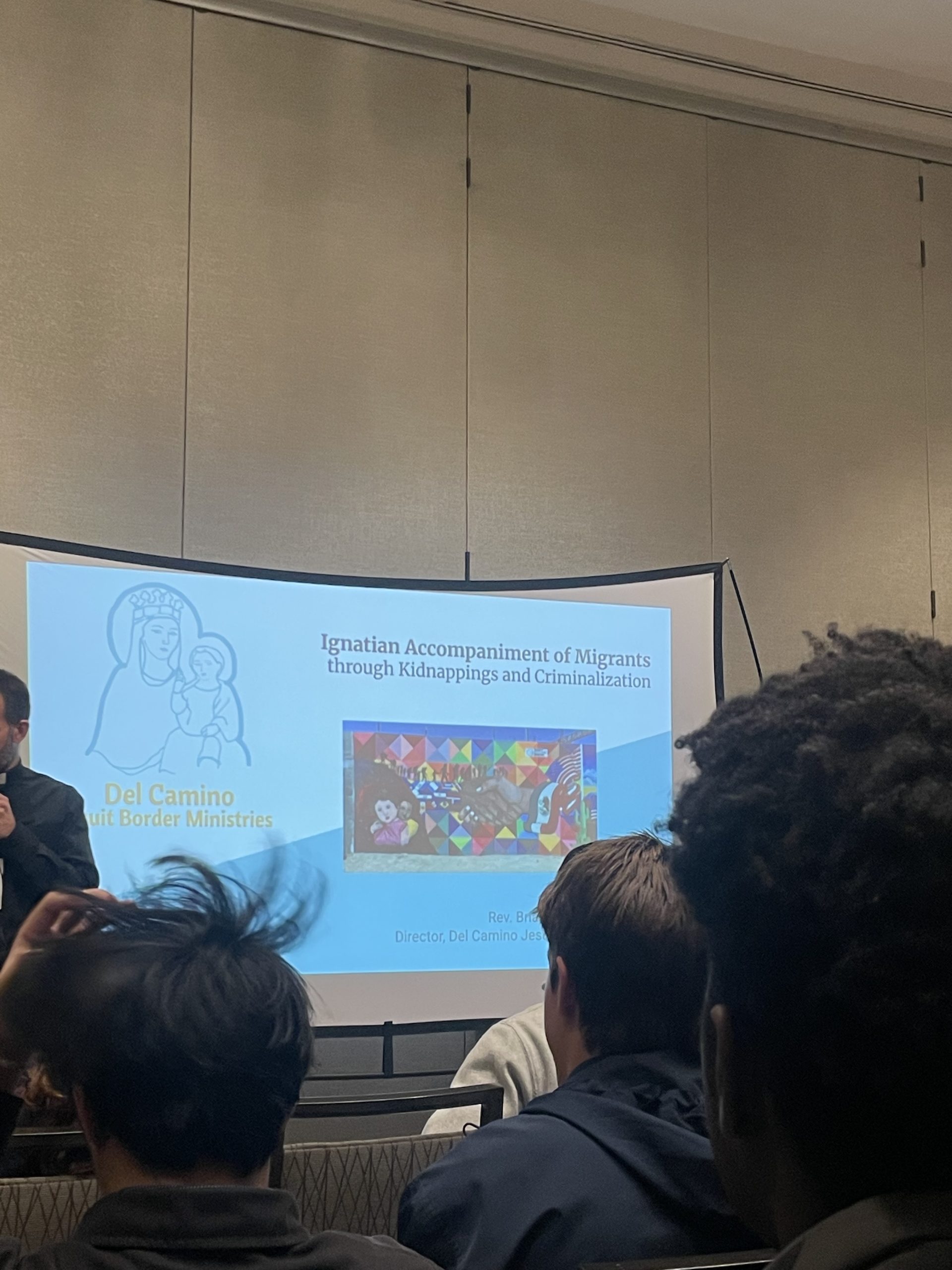
Breakout Session: "Ignatian Accompaniment of Migrants: Through Kidnappings and Criminalization"
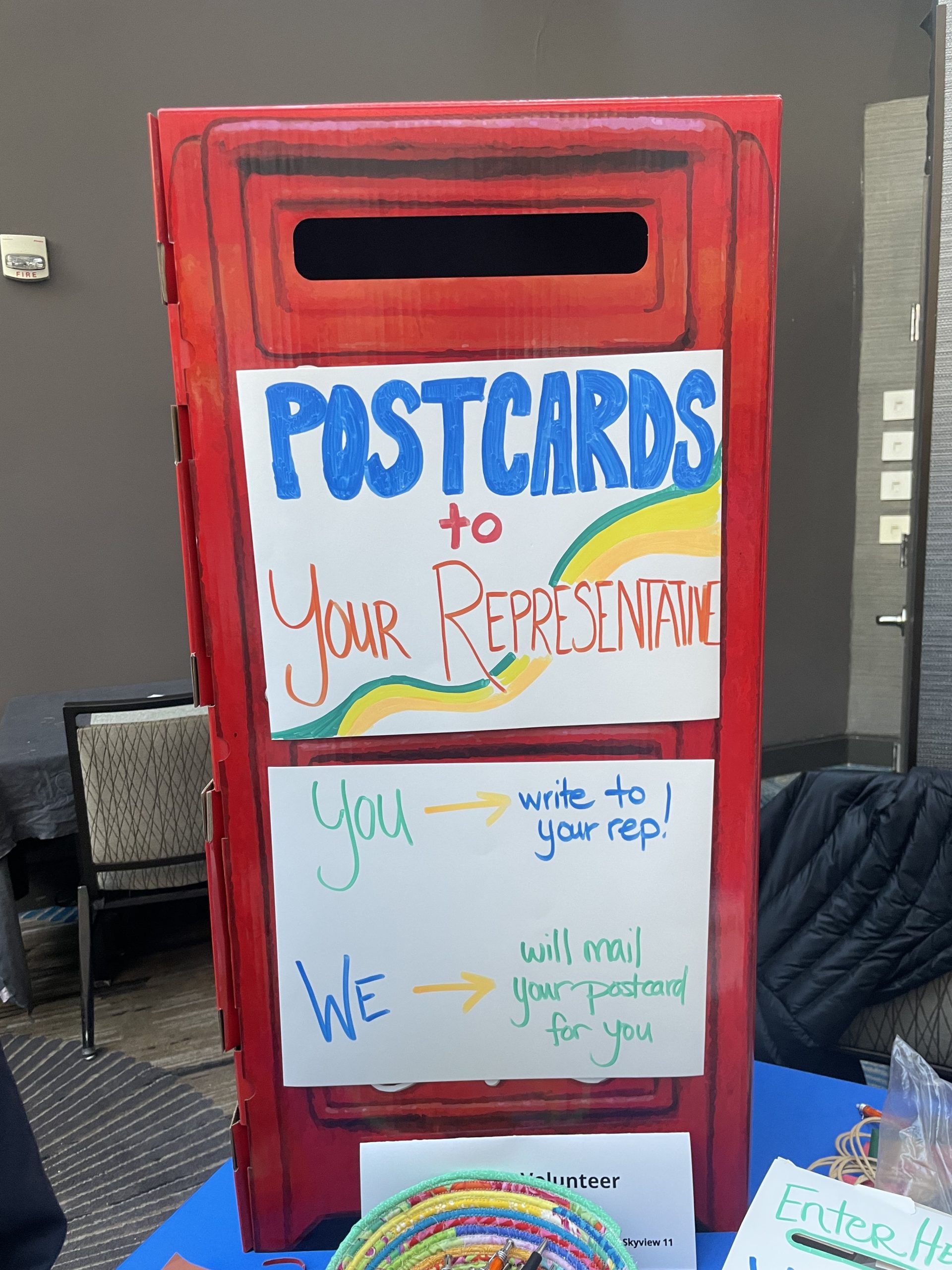
In between sessions, participants had the opportunity to write postcards to representatives
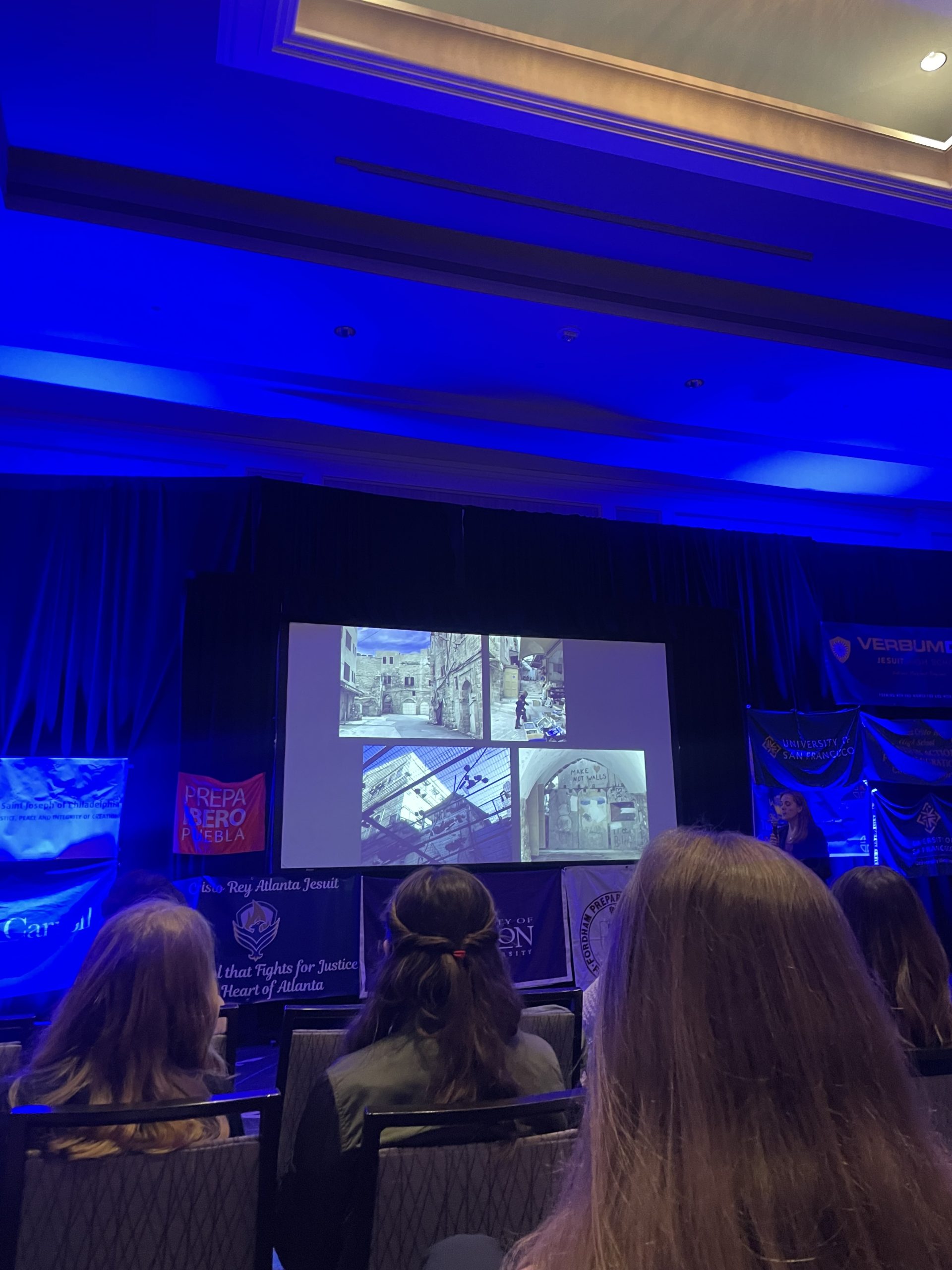
Breakout Session: Journeying Toward Justice in Israel-Palestine
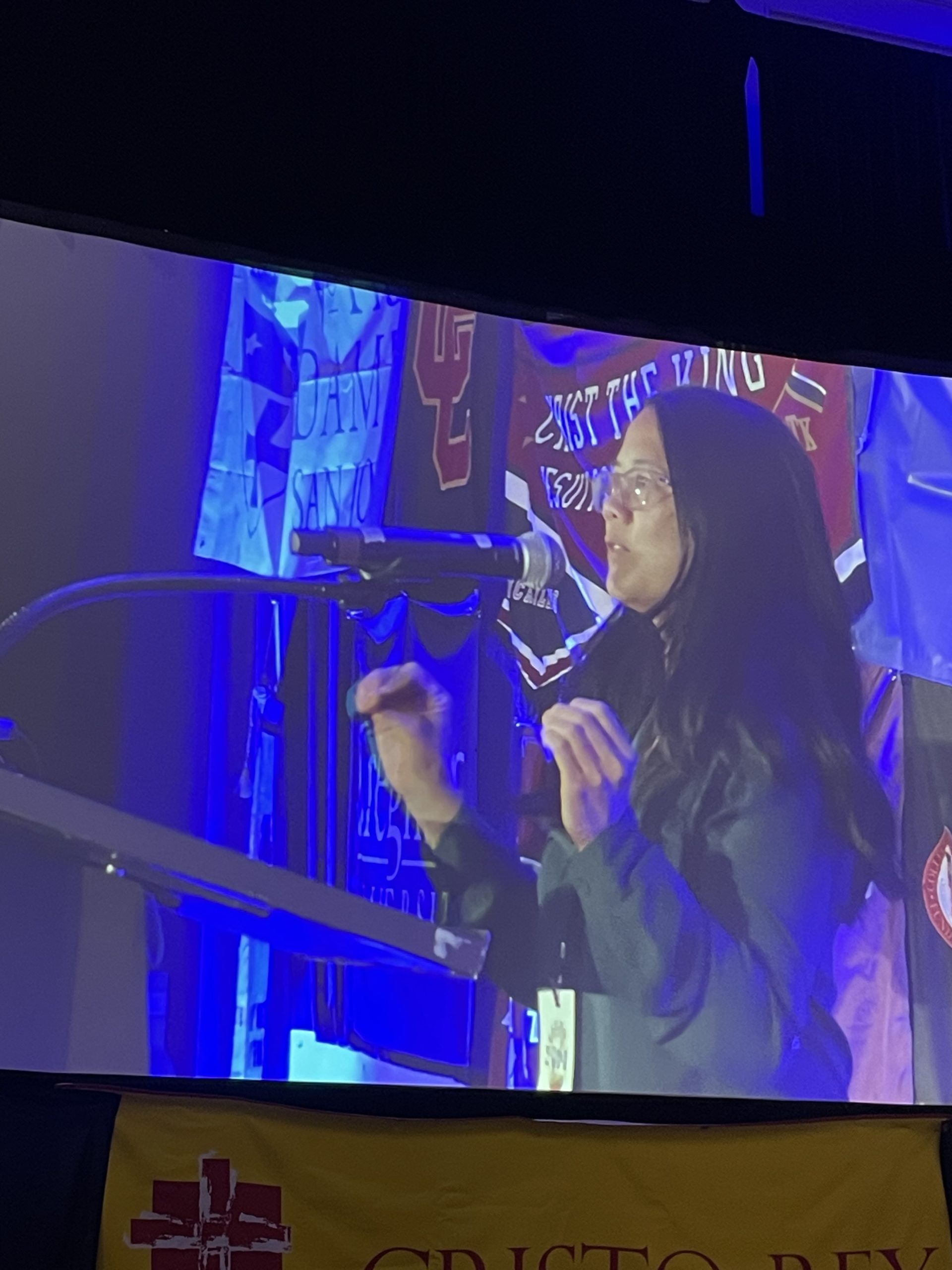
Keynote speaker Christina Leano
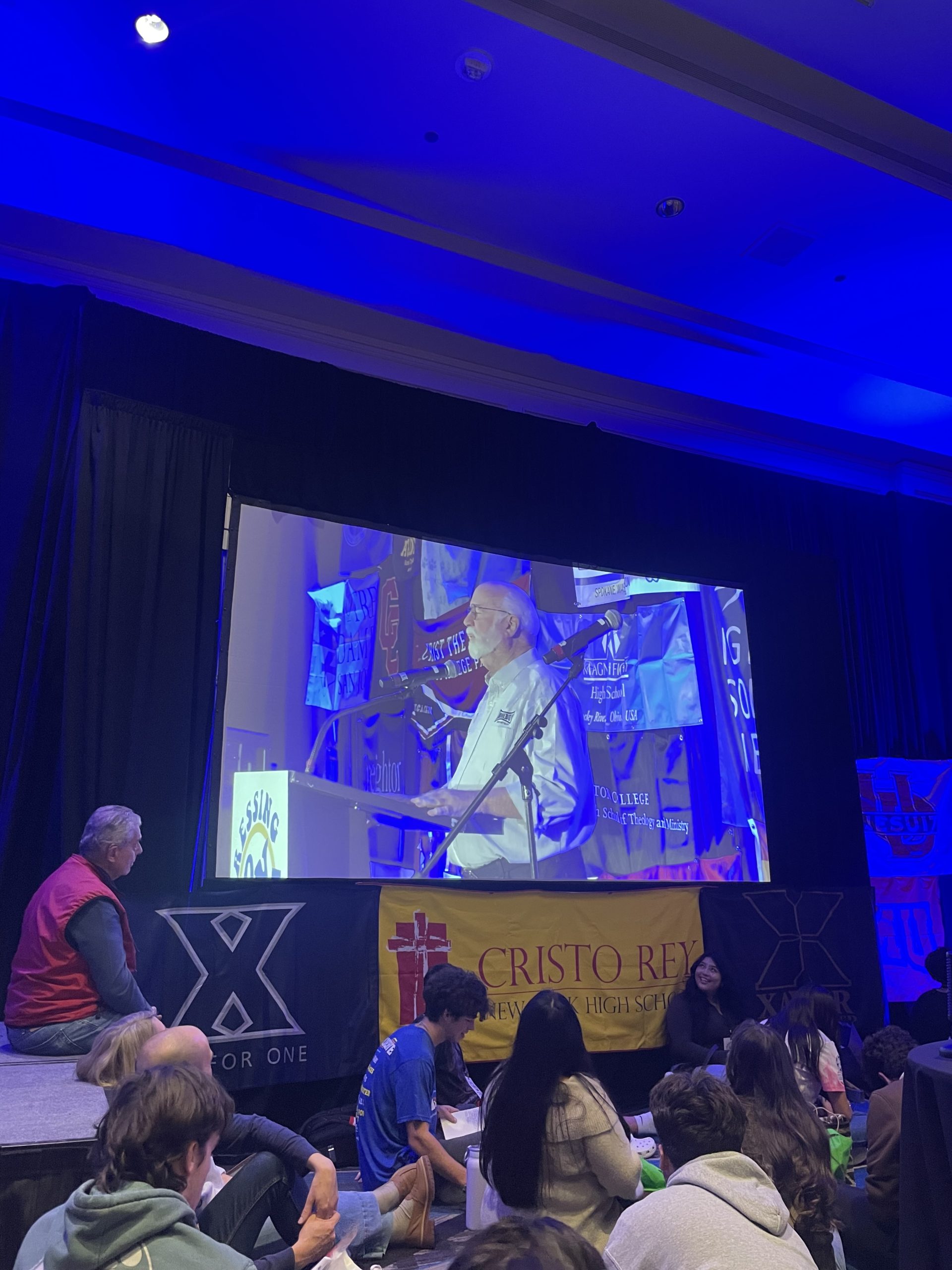
Keynote speaker Fr. Greg Boyle, SJ
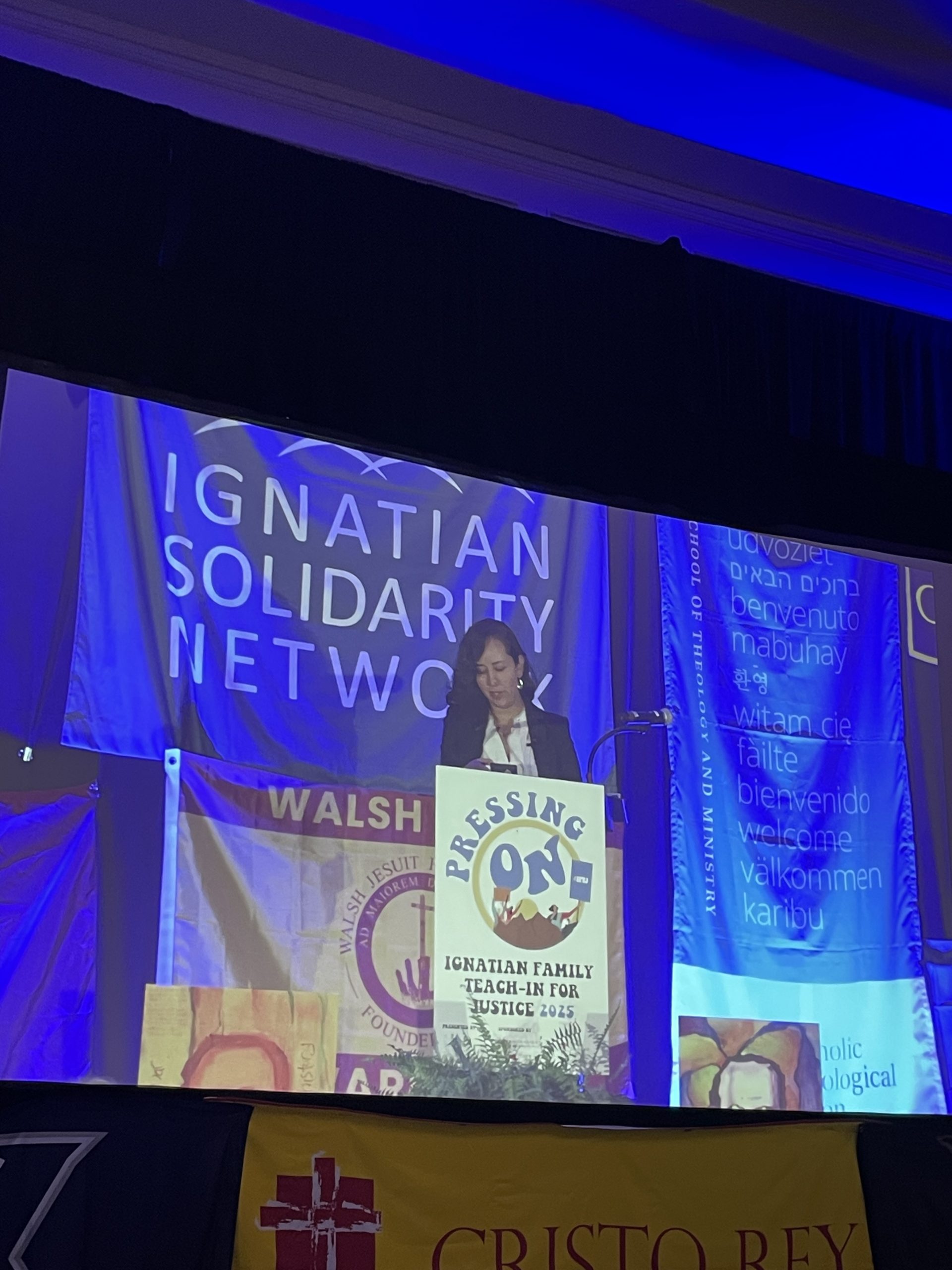
Keynote Speaker Yunuen Trujillo
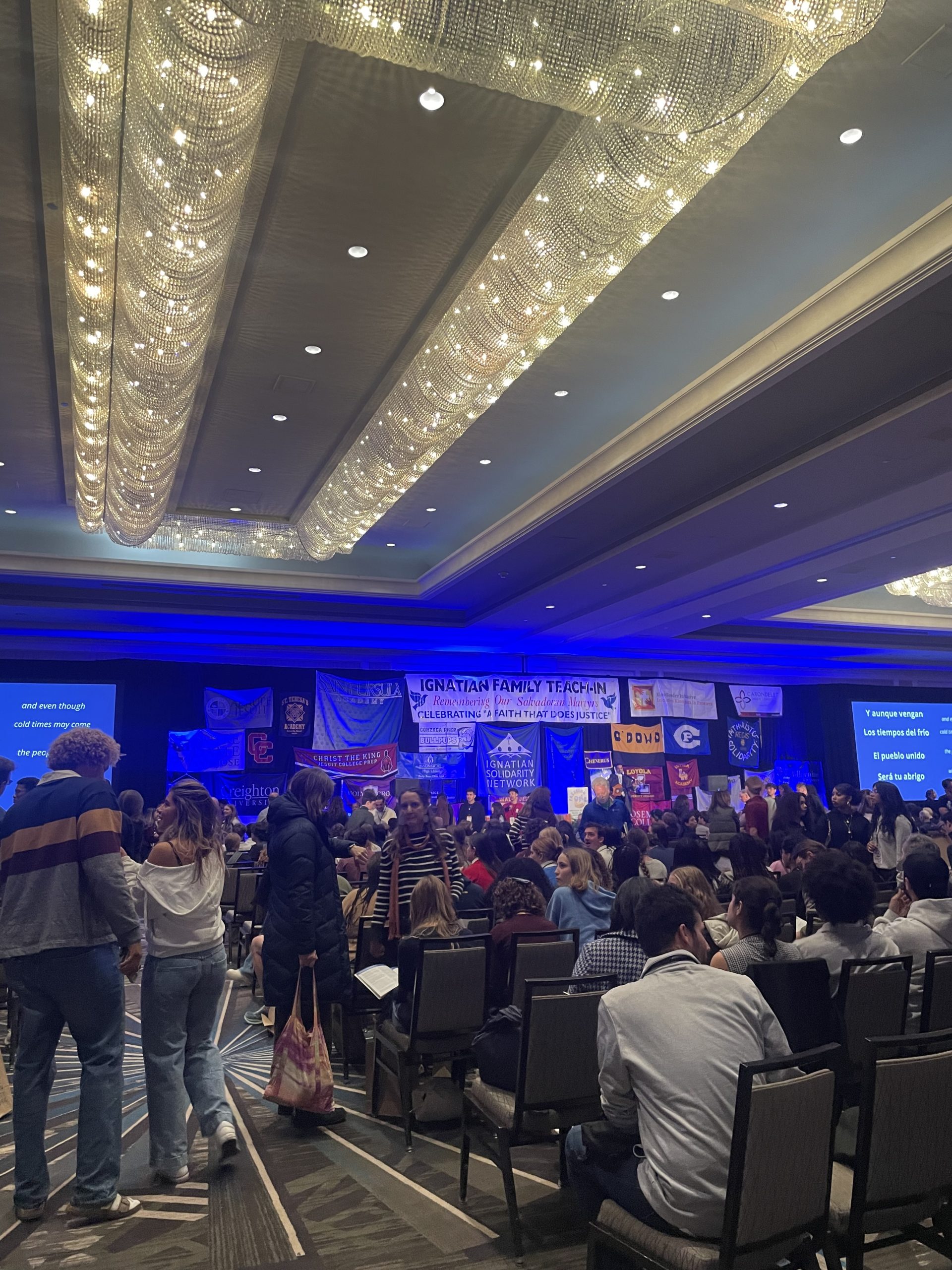
Flags from participating institutions filled the conference room that served as the weekend’s “home base”

Zuza and Eva Lee FCLC '27 in the Ram Van en route to D.C.